
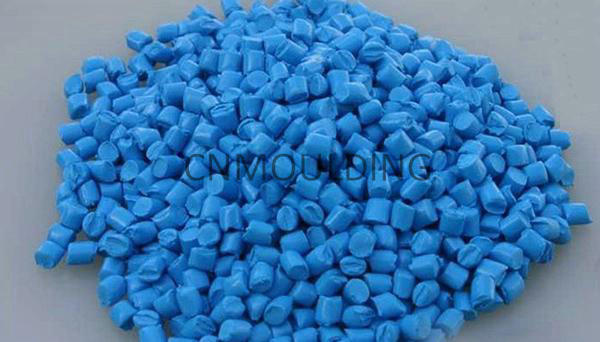
Maximizing PE (Polyethylene) Injection Molding: Engineering Solutions for High-Shrinkage Resins
Polyethylene (PE)—including HDPE, MDPE, and LDPE—is one of the most widely used materials in global manufacturing due to its exceptional flexibility, impact resistance, and cost-effectiveness. However, in high-precision injection molding, PE is far from simple. Its semi-crystalline structure introduces severe processing challenges, most notably high mold shrinkage, dimensional instability, and warpage.
At our facility, we look at PE through the lens of seasoned mold makers and injection molding experts. We don’t just melt plastic; we engineer custom tooling and process parameters that tame PE’s erratic shrinkage, turning a high-risk material into a highly stable, high-performance, and cost-optimized product.
1. What Products Are Best Suited for PE Injection Molding?
When engineered correctly, PE is the ideal choice for products requiring high chemical resistance, excellent low-temperature toughness, and food-grade safety. Over decades of production, we have optimized tools and molded PE for:
- Industrial Logistics & Material Handling: Heavy-duty transport pallets, stackable crates, structural bins, and large storage containers requiring exceptional impact strength.
- Precision Packaging & Closures: High-production consumer caps, flip-top closures, chemical-resistant bottles, and thin-walled food containers.
- Consumer & Household Goods: Houseware items, structural components for appliances, and children’s toys requiring non-toxic, highly durable performance.
- Automotive & Fluid Handling: Chemical tanks, fluid reservoirs, and durable piping components that must withstand harsh environmental degradation.
2. Key Advantages of Injection-Molded PE Products
When molded under precise processing windows with optimized tooling, finished PE parts deliver irreplaceable structural benefits:
- Unmatched Low-Temperature Impact Strength: PE retains its flexibility and toughness even in sub-zero environments where other plastics fracture.
- Superb Chemical & Environmental Resistance: It is highly resistant to strong acids, bases, and organic solvents, making it excellent for long-term industrial or outdoor exposure.
- Excellent Cost-to-Performance Ratio: PE offers a highly economic raw material cost, which, when combined with high-speed automated molding cycles, drastically lowers per-part costs.
- Strict Biocompatibility & Food Safety: Inherent compliance with FDA and international food-contact standards without the need for harmful plasticizers.
3. Critical PE Processing Risks: How Our Experience Protects Your Project
The single biggest headache with PE injection molding is its high and non-uniform shrinkage rate (typically 1.5% to 3.0%). If your molder treats PE like standard ABS or PC, you will end up with warped, out-of-spec parts.
Here is how our engineering team proactively resolves and prevents the most common PE molding defects during the tool design and processing phases:
Challenge 1: Severe Part Warpage and Dimensional Distortion
- The Risk: PE contracts dramatically as it cools from a molten state to a crystalline solid. If different areas of the part cool at different rates, internal stresses cause the part to twist, bow, or warp out of tolerance.
- Our Tooling Solution: We resolve this at the source by designing highly advanced, conformal cooling channels or strategic multi-zone cooling circuits within the mold. By ensuring perfectly uniform mold temperature distribution across both the core and cavity, we minimize internal stress and lock in exact part dimensions.
Challenge 2: Heavy Sink Marks in Thick-Walled Sections
- The Risk: PE parts with thick ribs, bosses, or uneven wall thicknesses suffer from heavy sink marks because the core of thick sections stays hot longer and pulls the solidified skin inward as it shrinks.
- Our Processing & Design Solution: First, we conduct a rigorous DFM (Design for Manufacturability) review to help you optimize wall-to-rib ratios (ideally keeping ribs at 40-60% of the main wall thickness). Second, we utilize precision, high-pressure injection molding machines with tailored holding pressure and extended packing profiles to continuously feed material into the cooling cavities, completely packing out sink marks.
Challenge 3: Excessive Flash (Brimbing/Pifang) due to High Flowability
- The Risk: PE has a very low melt viscosity when heated, meaning it flows incredibly easily. If a mold has minor parting line wear, or if the clamping force is insufficient, the molten PE will seep into microscopic gaps, resulting in unsightly flash that requires manual trimming.
- Our Manufacturing Solution: We build PE production molds with ultra-tight machining tolerances using high-rigidity mold bases to prevent deflection under injection pressure. Furthermore, we optimize the injection speed profile using multi-stage profiling—fast injection to fill the cavity, followed by a controlled deceleration near the end of the stroke—to achieve flawless edge quality without flash.
Partner with a Precision PE Injection Molder
Successfully manufacturing PE components at high volumes requires more than just a standard injection machine; it requires a deep, scientific understanding of polymer crystallization and advanced thermal mold design.
We bring years of hard-earned, practical shop floor experience to your project. By running comprehensive Moldflow simulations before a single piece of steel is cut, we optimize gate locations, predict shrinkage paths, and eliminate potential defects before they can occur.
Don’t gamble your project on trial-and-error manufacturing. Partner with an expert team that delivers right-the-first-time PE tooling and molding solutions.


