
Advanced ABS Injection Molding: Engineering Flawless Tooling & Surface-Critical Solutions
Acrylonitrile Butadiene Styrene (ABS) is the backbone of the precision engineering plastics industry, celebrated for its superb balance of impact resistance, structural rigidity, and aesthetic versatility. Because it is an amorphous polymer with relatively low shrinkage, many molders treat it as a “simple” material. However, achieving a flawless, high-gloss surface or high-strength structural integrity on an ABS part requires highly specialized tooling engineering and process control.
At our facility, we bridge the gap between product design and production reality. We leverage decades of hands-on injection mold making and processing experience to eliminate common ABS cosmetic and structural defects, ensuring your components are optimized for both durability and premium surface finishes.
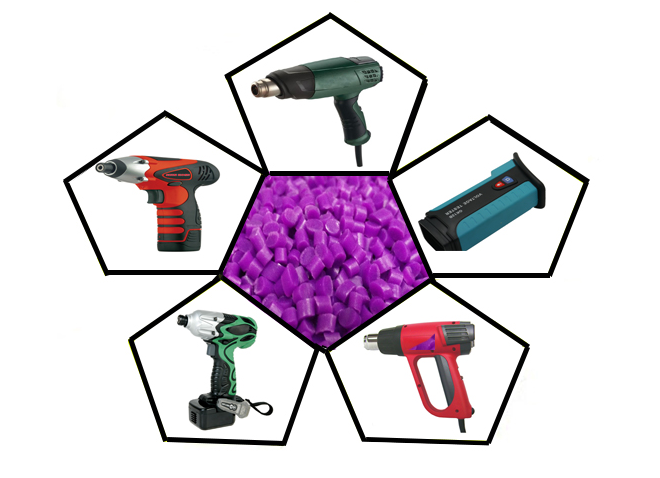
1. What Products Are Best Suited for Custom ABS Injection Molding?
ABS is the premier choice for products that require structural toughness paired with strict aesthetic, painting, or electroplating demands. We regularly design tools and execute high-stability molding runs for:
- Automotive Interiors & Exteriors: Dashboards, instrument panels, pillar trim covers, radiator grilles, and mirror housings requiring precise fitment and UV/temperature resilience.
- Premium Electronics & Consumer Housings: Rigid enclosures for medical devices, computer peripherals, smart home hubs, and power tool casings that require high impact protection.
- Surface-Critical Consumer Appliances: Vacuum cleaner bodies, coffee machine facias, and air purifier housings that demand high-gloss finishes, painting, or chrome electroplating.
- Precision Industrial Components: Complex structural brackets, gears, meters, and internal mechanisms where tight dimensional tolerances are non-negotiable.
2. Key Material Advantages of Managed ABS Production
When injection molded within an optimized processing window and using precise tool geometry, ABS components deliver exceptional engineering value:
- Superior Aesthetic and Post-Processing Capabilities: ABS has excellent affinity for secondary finishes, including painting, pad printing, ultrasonic welding, and high-quality chrome electroplating.
- High Dimensional Stability: With a remarkably low and predictable mold shrinkage rate (typically 0.4% to 0.7%), ABS allows us to achieve highly accurate, tightly tolerances parts consistently over high-volume runs.
- Balanced Mechanical Performance: The unique combination of Acrylonitrile (chemical resistance/hardness), Butadiene (impact toughness), and Styrene (rigidity/processability) provides a well-rounded, robust structural profile.
3. Critical ABS Processing Pitfalls: How Our Experience Protects Your Brand
While ABS is forgiving in terms of shrinkage, it is highly sensitive to shear stress, moisture, and gate design. Mismanaging these factors leads to structural weaknesses and surface blemishes that ruin product appeal.
Here is how our engineering team proactively troubleshoots and solves the three biggest ABS molding challenges:
Challenge 1: Cosmetic Weld Lines (Knit Lines) and Strength Reduction
- The Risk: When molten ABS splits around a core or boss and reunites, it forms a weld line. If the melt temperature drops even slightly at the junction, the polymer chains fail to interlock fully, resulting in a visible cosmetic line and a severe structural weak point.
- Our Solution: We run comprehensive Moldflow analysis before cutting tool steel to strategically position gates, ensuring weld lines occur in hidden, non-critical structural areas. Furthermore, we optimize mold venting and utilize hot runner systems or dynamic mold temperature control to maintain high melt fronts, making knit lines virtually invisible and structurally sound.
Challenge 2: Splay Marks, Silver Streaks, and Moire Patterns
- The Risk: ABS is highly hygroscopic (absorbs moisture quickly). If it is not dried properly, or if the injection speed causes excessive shear stress at the gate, trapped moisture or degraded gas turns into unappealing silver streaks or splay marks across the part surface.
- Our Solution: We enforce rigorous material preparation protocols using advanced desiccant dehumidifying dryers to ensure ABS moisture content is below 0.02% prior to molding. Additionally, we utilize rounded, optimized gate profiles (such as fan gates or sub-gates) to reduce shear stress and implement multi-stage injection speed profiling to transition smoothly past the gate.
Challenge 3: Latent Internal Stress Causing Cracking Post-Painting/Electroplating
- The Risk: For parts intended for secondary operations like electroplating or painting, high injection pressures can lock internal stresses into the plastic matrix. When the coating solvents or chemicals hit the part later, the plastic releases that stress by micro-cracking or warping.
- Our Solution: Our process engineers use specialized molding windows—combining higher melt and mold temperatures with optimized, lower injection pressures and controlled cooling cycles. This allows the ABS molecules to relax naturally inside the cavity, yielding low-stress parts that accept chemical coatings and electroplating flawlessly without premature cracking.
Your Partner in Precision ABS Tooling & Molding
A perfect ABS part is the result of perfect harmony between product geometry, robust mold metallurgy, and expert processing parameters. Whether you need a high-gloss consumer finish or a robust industrial housing, our engineering team brings deep floor experience to ensure your project succeeds without costly trial-and-error cycles.
Don’t settle for a molder who ignores the hidden physics of ABS processing. Partner with an expert manufacturer that delivers right-the-first-time tooling and zero-defect injection molding solutions.


