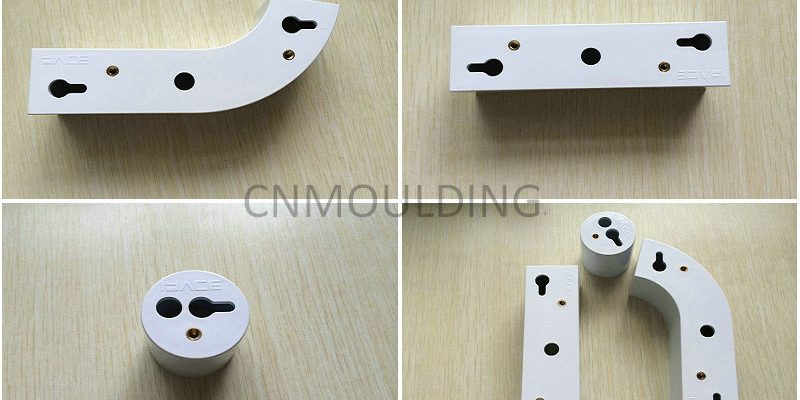
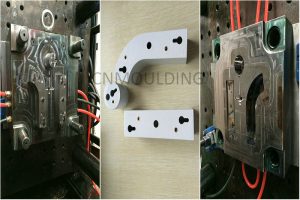
Custom LED Housing Mold Design, Injection Molding and Production
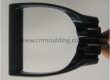
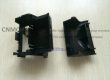
We are a Shanghai-based injection mold manufacturer and plastic injection molding company, providing mold design, tooling, injection molding, and production support for LED lighting housings and other plastic lighting components.
For LED lighting projects, the plastic housing is not simply an enclosure. It may need to provide electrical insulation, protect internal components, maintain dimensional stability, support assembly, and meet specific appearance requirements.
Our engineering team works with customers from the product development stage to evaluate the part design, material, mold structure, cooling requirements, and injection molding process before production tooling is manufactured.
The goal is straightforward: develop a plastic housing that can be molded consistently and assembled reliably in production.
Custom LED Plastic Housing Mold and Injection Molding
LED lighting products come in many different configurations, including indoor fixtures, outdoor lighting, spotlights, wall washers, recessed lights, landscape lights, and underwater lighting.
The housing design can vary significantly depending on the application.
Typical projects may include:
- LED light housings
- LED spotlight housings
- LED wall washer housings
- LED recessed light housings
- LED floodlight housings
- LED landscape light housings
- LED underground light housings
- LED underwater light housings
- LED electrical enclosures
- LED covers and bezels
- Custom lighting components
We manufacture the injection molds and molded plastic parts according to the customer’s 3D CAD data, 2D drawings, specifications, or existing samples.
Engineering Considerations for LED Plastic Housings
A good LED housing starts with the part design.
Before manufacturing the mold, we review the design from a molding and production perspective.
1. Material Selection
The plastic material should be selected according to the actual working environment of the LED product.
Depending on the application, materials such as PC, ABS, PC/ABS, PA, PBT, or flame-retardant engineering plastics may be considered.
The selection depends on requirements such as:
- Operating temperature
- Impact resistance
- Electrical insulation
- Flame-retardant requirements
- UV exposure
- Chemical resistance
- Surface appearance
- Dimensional stability
- Regulatory requirements
We do not recommend selecting a material based only on price. The resin needs to match the product’s operating conditions and certification requirements.
2. Wall Thickness and Warpage
LED housings often contain ribs, bosses, mounting points, screw towers, clips, and other structural features.
If these areas are significantly thicker than the surrounding wall, uneven cooling and shrinkage can result in:
- Sink marks
- Warpage
- Dimensional variation
- Internal stress
- Difficult assembly
During DFM, our engineers look for excessive material thickness and use core-out, ribs, and optimized wall sections where appropriate.
The objective is to maintain sufficient mechanical strength without creating unnecessary thick sections.
3. Draft Angle and Ejection
The housing must be released from the mold without damaging the plastic surface.
We therefore evaluate:
- Draft angle
- Mold texture
- Parting line
- Ejector pin locations
- Core and cavity surfaces
- Side undercuts
- Slider or lifter requirements
Insufficient draft can create drag marks, scratches, deformation, or excessive ejection force.
For textured LED housings, the required draft may be greater than for a polished surface, depending on the texture depth and material.
4. Gate Location
Gate location directly affects the filling behavior of the housing.
For larger LED housings or parts with complex geometry, an unsuitable gate location can create:
- Weld lines
- Air traps
- Uneven filling
- Excessive injection pressure
- Visible gate marks
- Local deformation
Our mold engineers evaluate the gate location based on part geometry, resin characteristics, appearance requirements, and the expected molding process.
Depending on the project, the mold may use a cold runner, hot runner, pin gate, edge gate, or other suitable gating configuration.
5. Cooling System
Cooling is one of the most important factors in injection mold performance.
LED housings with uneven wall thickness or deep cores can be difficult to cool uniformly. Poor cooling can increase cycle time and contribute to dimensional instability and warpage.
When designing the mold, we consider the location and accessibility of cooling channels around the core and cavity.
For production molds, the objective is not simply to make the part come out of the mold. The cooling system should support stable cycle times and repeatable part dimensions.
LED Housing Mold Design
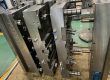
The mold structure depends on the geometry and production requirements of the LED housing.
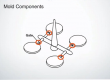
A typical injection mold may include:
- Core and cavity
- Parting line
- Runner system
- Hot runner or cold runner
- Injection gate
- Cooling channels
- Ejector system
- Slider mechanisms
- Lifter mechanisms
- Guide and support components
If the housing contains side holes, locking features, clips, or other undercuts, the mold may require sliders or lifters.
We select the mold structure based on the actual part rather than using the same tooling concept for every LED housing.
Plastic Housing Appearance Control
LED lighting products are often highly visible products, so cosmetic quality can be as important as dimensional accuracy.
Depending on the customer’s requirements, the molded housing may require:
- Smooth finish
- Texture
- Matte finish
- Gloss finish
- Color matching
- Logo
- Silk screening
- Pad printing
- Other secondary finishing processes
The mold surface must be specified correctly because the final plastic appearance is directly affected by the cavity finish.
We also consider gate vestige, parting lines, ejector marks, weld lines, and other visible mold-related features during the design stage.
LED Housing Injection Molding Problems We Help Prevent
The most expensive molding problems are usually easier to prevent during product and mold design than to correct after tooling is completed.
For LED plastic housings, we commonly evaluate potential risks such as:
Sink Marks
Thick bosses, ribs, and mounting areas can create localized sink marks.
We review the geometry and material distribution before mold construction and determine whether core-out or geometry modification is required.
Warpage
Large flat housing surfaces can be sensitive to uneven shrinkage and cooling.
Mold cooling, wall thickness, gate location, material orientation, and processing conditions all need to be considered.
Short Shot
Long flow lengths or restricted gates can make complete filling difficult.
We evaluate the flow path, gate configuration, venting, and injection requirements during mold development.
Weld Lines
Weld lines can occur where two melt fronts meet.
Their location is important for both appearance and mechanical performance. Where possible, gate location and flow direction are adjusted to place weld lines in less critical areas.
Flash
Flash can occur when molten plastic enters an unwanted gap between mold components.
Proper mold fitting, parting-line design, clamping conditions, and processing parameters are all important for controlling flash.
From LED Product Development to Mass Production
We support LED lighting projects through the complete manufacturing process:
Part Design → DFM Review → Mold Design → Mold Manufacturing → Mold Trial → Sample Inspection → Mold Modification → Injection Molding → Production Inspection → Delivery
Our engineers review the part before cutting steel.
This provides an opportunity to identify potential manufacturing problems while changes to the CAD model are still relatively easy.
For example, changing a boss diameter or adding draft during the design stage is normally much easier than modifying an existing production mold after the tooling has been completed.
This early engineering review can reduce tooling changes, shorten development time, and reduce the risk of discovering molding problems during mass production.
LED Plastic Injection Molding Manufacturer in Shanghai
We are based in Shanghai, China, and provide both injection mold manufacturing and plastic injection molding.
This combination allows us to manage the mold and molded part as one manufacturing process.
Our engineering and production team can support:
- Injection mold design
- DFM analysis
- Plastic material evaluation
- Mold manufacturing
- Mold trial
- Injection molding
- Dimensional inspection
- Cosmetic inspection
- Mold modification
- Mass production
- Packaging and shipment
For overseas customers, this integrated approach also makes technical communication easier because mold design, tooling, and injection molding are managed within the same manufacturing workflow.
Why Work With a Mold and Injection Molding Manufacturer?
For a new LED product, purchasing the mold from one supplier and finding another company to run the production can create unnecessary communication and technical issues.
The mold may be technically acceptable but not optimized for the actual production process.
By combining injection mold manufacturing and plastic injection molding, we can evaluate both sides of the process:
Will the mold produce the required geometry?
and
Will the mold run consistently in production?
This is particularly important for LED housings with large surfaces, cosmetic requirements, complex internal structures, or tight assembly tolerances.
Start Your LED Plastic Housing Project
If you are developing a new LED lighting product, send us your 3D CAD model, 2D drawing, material specification, or existing sample.
Our engineers can review the part and provide feedback on:
- Mold structure
- Gate location
- Draft angle
- Wall thickness
- Undercuts
- Cooling
- Ejection
- Material selection
- Potential molding defects
- Injection molding requirements
We focus on practical manufacturing solutions that help customers move from product design to injection mold and stable mass production.
Contact our Shanghai injection molding team to discuss your LED plastic housing project.