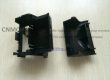
Troubleshooting Short Shots in Nylon Injection Molding: Engineering Solutions
Introduction
Nylon (Polyamide, PA6/PA66) is a cornerstone material in automotive and industrial manufacturing, prized for its high mechanical strength and thermal resistance. However, due to its semi-crystalline nature, rapid solidification, and viscosity characteristics, engineers frequently encounter the issue of short shots (incomplete mold filling).
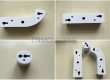
A short shot occurs when the polymer melt solidifies before completely occupying the mold cavity, resulting in structurally deficient and visually defective parts. As a precision injection molder, CNMOULDING analyzes the root causes of nylon short shots and delivers actionable engineering solutions to optimize your production yield.
Root Causes of Nylon Short Shots
In nylon injection molding, short shots are rarely caused by a single factor. They typically stem from a mismatch between material behavior, mold thermodynamics, and processing parameters:
- High Melt Viscosity & Rapid Freezing: Nylon has a sharp melting point and solidifies quickly upon cooling. If the melt temperature drops too fast, the flow front freezes prematurely.
- Inadequate Venting: Nylon molding requires rapid injection speeds. If air trapped inside the cavity cannot escape, it creates backpressure that counteracts the injection pressure, causing short shots or burn marks.
- Restrictive Gating and Runner Design: Gates or runners that are too small restrict polymer flow, causing excessive pressure drops before the melt reaches the thin-walled sections.
- Insufficient Injection Pressure or Volumetric Shot Size: Simple machine-side limitations, such as inadequate holding pressure or a poorly calibrated shot size, can leave the cavity under-filled.
Comprehensive Engineering Solutions
To systematically eliminate short shots in nylon molded parts, troubleshooting must span across process optimization, tool modification, and material handling.
1. Process Parameter Optimization
Before modifying tool steel, fine-tune the injection molding parameters to improve nylon’s flowability:
- Increase Melt & Mold Temperatures: Elevate barrel temperatures (within the material’s TDS limits) and increase mold temperature using a dynamic controller to delay the freezing of the flow front.
- Optimize Injection Speed and Pressure: Utilize a multi-stage injection profile. High-speed injection helps nylon fill thin walls before freezing, while sufficient packing/holding pressure ensures the cavity is completely packed out.
- Check the Non-Return Valve: Ensure the check ring on the screw is not leaking, which causes pressure loss during the injection phase.
2. Advanced Mold Design & Tooling Modifications
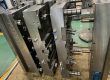
If process adjustments cannot resolve the issue, the mold geometry must be optimized for nylon’s rheological properties:
- Enhance Cavity Venting: Place generous vent slots ($0.015\text{ mm}$ to $0.025\text{ mm}$ depth for nylon to prevent flashing while allowing air escape) near the last area to fill and along the parting line.
- Optimize Gate and Runner Dimensions: Enlarge gate sizes (such as edge gates or sub gates) and modify runner diameters to minimize shear stress and pressure drops.
- Relocate Gates: Move the gate closer to thin-walled sections or structural ribs to ensure these critical features are filled while the material is at its highest temperature and lowest viscosity.
3. Material Preparation (Moisture Control)
Nylon is highly hygroscopic. Ironically, while excess moisture causes splay and degradation, over-drying nylon (reducing moisture content below $0.08\%$) can drastically increase its melt viscosity, leading to flow resistance and subsequent short shots. Maintain a precise moisture equilibrium ($0.1\% – 0.2\%$) using desiccant dryers for optimal processing.
Conclusion
Resolving short shots in nylon injection molding requires a deep understanding of Polyamide’s thermal and physical transitions during the molding cycle. By auditing your venting design, optimizing thermal profiles, and ensuring robust DFM (Design for Manufacturing) practices, you can achieve zero-defect production.
At CNMOULDING, we utilize advanced Moldflow analysis to predict flow fronts and eliminate short shot risks during the tool design phase. If you are facing persistent molding defects or launching a new automotive/industrial nylon project, contact our engineering team today for expert consultation and a competitive quotation within 24 hours.