Wearable Technology in Healthcare: Overcoming the Tooling & Precision Injection Molding Challenges
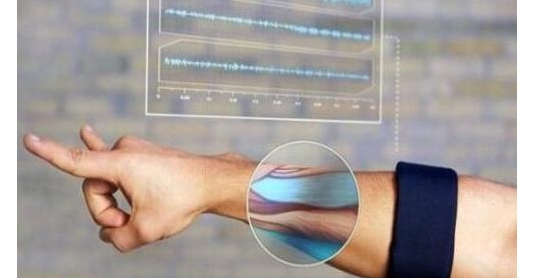
According to the market research organization Transparency Market Research, medical and health management products have become the mainstream of the wearable device market. From continuous glucose monitors (CGMs) and smartwatches to real-time biometric patches, wearable technology is revolutionizing how healthcare is delivered—shifting from reactive treatments to proactive, personalized, and accessible data tracking.
However, as these medical devices become smaller, more complex, and heavily packed with sensitive sensors, they present rigorous challenges for hardware designers and manufacturers. At CNMOULDING, with nearly 30 years of toolmaking mastery, we bridge the gap between advanced medical industrial designs and flawless, regulatory-compliant production.
Here is how our engineering-first approach addresses the core manufacturing challenges of next-generation medical wearables.
1. Material Selection: Biocompatibility & Mechanical Durability
Wearable medical devices are often in direct, prolonged contact with human skin and must withstand daily sweat, cleaning alcohols, and physical impacts. Traditional commercial plastics fail to meet these requirements.
- The Engineering Challenge: Manufacturers must utilize specialized medical-grade resins (such as medical-grade polycarbonate, ABS, and cyclic olefin copolymers) that offer strict biocompatibility (ISO 10993 compliance), high chemical resistance, and structural balance without leaching harmful additives.
- The CNMOULDING Solution: We work natively with certified medical-grade polymers. Our injection molding processes are calibrated to maintain material purity, preventing any cross-contamination or degradation during the melting and cycling phases, ensuring the structural shell remains lightweight yet robust.
2. Advanced Multi-Material Overmolding (LSR & Hard Plastics)
To achieve the ergonomic comfort and water resistance (IP67/IP68) necessary for wearable health monitors, components must seamlessly combine soft, skin-safe materials with rigid structural housings.
- The Engineering Challenge: Bonding liquid silicone rubber (LSR) or thermoplastic elastomers (TPE) onto a rigid plastic chassis (like PC/ABS) requires precise thermal control and tight shut-off design in the mold tool. Any flash, misalignment, or weak bonding will compromise the device’s seal, ruining internal sensors when exposed to moisture.
- The CNMOULDING Solution: We specialize in high-precision multi-shot injection molding and overmolding tool design. Our tools utilize micro-tolerance CNC machining to create perfect mechanical or chemical interlocks between the soft skin-contact layers and the rigid device frame, completely eliminating the need for adhesives and guaranteeing long-term hermetic sealing.
3. Micro-Injection Molding & Ultra-Tight Tolerances
As electronic components shrink, the structural enclosures for devices like hearing aids or wearable biosensors demand microscopic wall thicknesses and intricate internal catch-features for PCBs.
- The Engineering Challenge: Large flow-length-to-thickness ratios in thin-walled medical parts often trigger short shots, high residual stress, or severe warpage, which can throw off critical internal electronic alignments.
- The CNMOULDING Solution: Our engineers employ comprehensive Moldflow simulation before cutting steel to predict filling behavior and optimize gate placement. We construct precision injection molds equipped with balanced hot runner systems and specialized ejector mechanisms to reliably produce thin-walled, micro-featured components with dimensional tolerances held within pm0.01mm.
4. Total Traceability & ISO 9001:2015 Standards
Unlike consumer electronics, healthcare hardware demands strict accountability. A flaw in a medical device shell could lead to a device failure, impacting real-time patient monitoring data.
At our modern manufacturing facility in Shanghai, CNMOULDING treats quality control as an engineering discipline. Operating under strict ISO 9001:2015 frameworks, we utilize advanced Coordinate Measuring Machines (CMM) and 3D laser scanning to verify every batch of medical housings against the original CAD files. We deliver full open-book data transparency, material certifications, and processing parameters to our global partners.
Partner with CNMOULDING for Medical Device Manufacturing
The wearable healthcare revolution is here, and success depends entirely on the precision of the hardware enclosure. Whether you are an international OEM designing a complex health tracker or a medical start-up requiring comprehensive DFM (Design for Manufacturability) support, CNMOULDING speaks your language.
Contact our Technical Project Managers today to receive a transparent cost analysis and preliminary DFM review for your next medical project.