Strategic Sourcing: Optimizing ROI with Advanced Plastic Injection Molding in China
For global OEMs and product engineers, selecting the right manufacturing partner for plastic injection molding involves balancing geometric precision, scalable capacity, and total cost of ownership (TCO). While global supply chains continue to evolve, China’s precision manufacturing corridors—particularly highly clusters like Shanghai—remain the benchmark for complex, high-volume thermoplastic production.
As an industry leader established in 1997, CNMOULDING demonstrates how integrating advanced engineering capabilities with centralized supply chain advantages addresses the modern demands of global medical, automotive, and industrial brands.
The Thermoplastic Advantage in Modern Industry
Industrial and commercial manufacturing relies heavily on thermoplastics due to their repeatable melt-processability, structural integrity, and recyclability. Transforming engineering resins into tight-tolerance components demands a highly controlled high-pressure injection molding process.
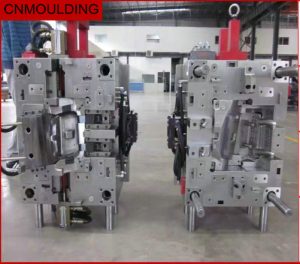
While the fundamental mechanics of injection molding—melting resin pellets, high-pressure injection into a steel mold cavity, and rapid cooling—appear straightforward, achieving micron-level consistency across high production volumes requires sophisticated process control. Companies partner with CNMOULDING to convert complex CAD concepts into high-yield, net-shape components that feature built-in bosses, ribs, and internal threads in a single operational cycle, eliminating expensive secondary machining.
Overcoming Global Supply Chain Friction
When international buyers evaluate overseas injection molding, their primary concerns are lead times, engineering communication, and quality assurance. CNMOULDING mitigates these risks through a structured, engineer-to-engineer (E2E) framework.
1. Accelerated Turnaround Times & Inventory Optimization
By leveraging a localized ecosystem of raw material suppliers, high-speed CNC machining centers, and mirror-EDM equipment, tool making and sampling cycles are significantly compressed. This rapid turnaround allows global businesses to reduce safety stock, free up capital, and maintain lean inventory levels.
2. Frictionless Engineering Communication
Design for Manufacturing (DFM) verification is the most critical phase of tool development.
“Advanced manufacturing provides decisive supply chain advantages to global companies,” notes Kenny Han, Vice President at CNMOULDING. “By utilizing synchronous digital workflows, detailed DFM reports, and rapid sampling, we eliminate language and logistical barriers. It makes modifying mold designs, viewing pilot runs, and validating tooling dimensions much more seamless and efficient for international engineering teams.”
Synergy Between Injection Molding and Advanced Prototyping
Modern plastic manufacturing does not operate in a vacuum. The integration of 3D Printing (Additive Manufacturing) alongside traditional injection molding has altered the product lifecycle:
- Rapid Tooling (RT) & Conformal Cooling: Rather than viewing 3D printing as a standalone technology, CNMOULDING leverages additive processes to print complex mold components, such as inserts with conformal cooling channels. This optimizes heat dissipation during the molding cycle, reducing cycle times and minimizing part warpage.
- Pre-Production Verification: Utilizing high-resolution prototyping allows mechanical and functional validation to run in parallel with full-scale steel mold fabrication, isolating design errors before tool steel is cut.
Unlocking Manufacturing Efficiency
Choosing CNMOULDING for your plastic manufacturing needs means cutting through marketing fluff and securing an ISO 9001:2015 and ISO 13485 certified production partner. We deliver the components that drive your products forward—on time, within specification, and optimized for market competition.
Explore our engineering capabilities and request a comprehensive DFM review for your next project at www.cnmoulding.com or www.chinamoldmaker.org.