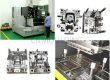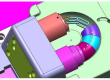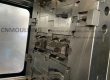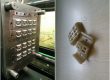
At CNMOULDING, manufacturing high-precision plastic injection molds requires a strict, multi-stage quality control framework. Serving global industries—including automotive, electronics, industrial components, and consumer goods—we implement standardized verification protocols across every phase of tool building to ensure dimensional accuracy, reliable production cycles, and long-term tooling durability.
The 9-Stage Mold Manufacturing & Inspection Workflow
To eliminate defects and ensure strict adherence to engineering specifications, every tool undergoes a rigorous step-by-step inspection process:
1. Mold Design Control
Before any steel is cut, the engineering team conducts a thorough Design for Manufacturing (DFM) analysis and mold flow simulation. We review draft angles, wall thickness, gate locations, ejector pin layouts, and cooling channel configurations to identify potential manufacturing risks early in the design stage.
2. Steel Material Certification
Tooling performance relies heavily on certified raw materials. We source high-grade mold steels (such as P20, H13, 718H, and NAK80) from reputable mills and verify mill test certificates (MTC) to guarantee chemical composition and material integrity.
3. Steel Hardness Inspection
Following rough machining and heat treatment, hardness tests are performed on core and cavity inserts. Verifying that the steel meets the specified Rockwell hardness (HRC) range ensures optimal wear resistance and mechanical strength during high-pressure injection.
4. Electrode Inspection
For complex geometries requiring Electrical Discharge Machining (EDM), electrodes (graphite or copper) are rigorously measured using coordinate measuring machines (CMM) before spark erosion to guarantee dimensional fidelity and prevent electrode offset.
5. Core & Cavity Dimensional Inspection
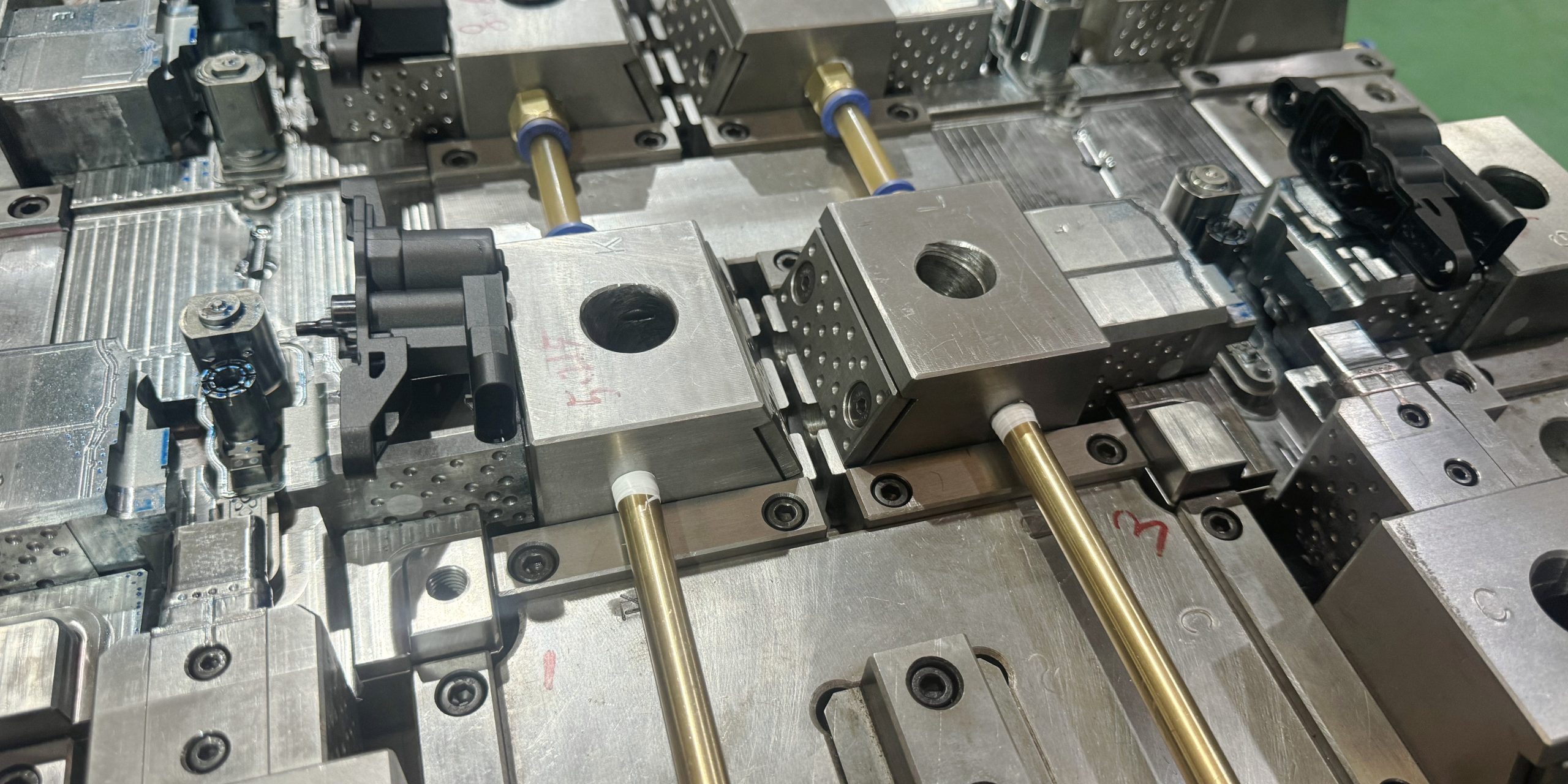
Post-machining CMM inspection is conducted on all core and cavity inserts. Tolerances are strictly maintained to ensure precise parting line shut-offs, slider fits, and overall geometric accuracy relative to the 3D CAD data.
6. Pre-Assembly Inspection
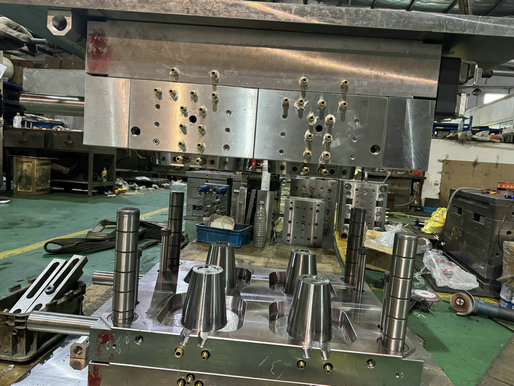
Before final fitting, component assembly interfaces are checked. This includes verifying guide pillar and bushing alignment, interlocks, wear plates, hydraulic cylinder strokes, and mechanical motion clearances to ensure smooth tool operation.
7. Mold Trial & Sample Inspection
Once assembled, the mold undergoes initial sampling (T1 trial). Molded prototype samples are inspected for dimensional accuracy, warp, flash, sink marks, and cosmetic finish. Trial reports and full dimensional measurement reports (CMM data) are compiled for client review.
8. Pre-Shipment Final Inspection
Prior to delivery, a comprehensive final audit is performed. This includes checking spare parts lists, cooling and hydraulic circuit pressure tests, surface anti-rust treatments, mechanical lock security, and the availability of complete technical documentation.
9. Export Packaging Inspection
To prevent transit damage during international freight, molds are secured inside sturdy export-grade wooden crates. Moisture barriers, vacuum sealing, and fixed mechanical bracing are applied and inspected prior to final container loading.
Capabilities & Engineering Expertise
Established in Shanghai in 1997, CNMOULDING specializes in custom plastic injection molds and progressive stamping dies. Equipped with advanced in-house CNC, EDM, and grinding machinery, our engineering team manages complex tooling requirements:
- High-Precision Tolerance: Capable of maintaining tight tolerances up to ±0.02 mm.
- Large-Scale Capabilities: Experience in manufacturing large-format injection molds up to 2200 mm.
- Global Export Standard: Exporting custom tooling to industrial clients across Europe, North America, and Asia.