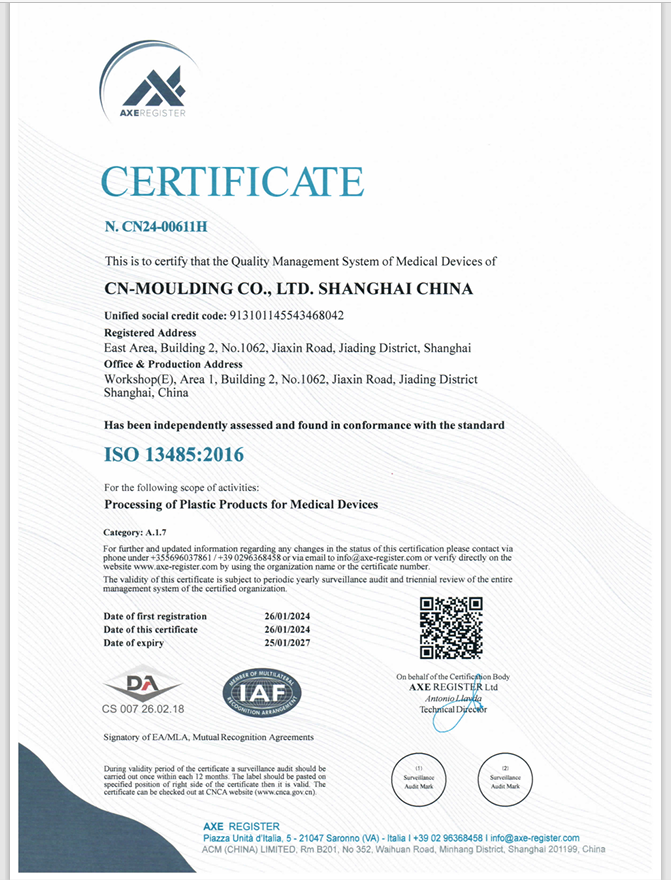
In the medical device industry, quality, safety, and regulatory compliance are non-negotiable. ISO 13485 is the globally recognized standard for a Quality Management System (QMS) specifically tailored for the medical device supply chain.
Based on the foundations of ISO 9001, ISO 13485 introduces stringent, industry-specific requirements to ensure that medical components are consistently manufactured to meet strict regulatory and customer expectations.
For medical device OEMs, partnering with a toolmaker and injection molder who understands and aligns with ISO 13485 standards is critical to mitigating risks and accelerating time-to-market.
How ISO 13485 Applies to Medical Mold Making & Tooling
ISO 13485 is not just a certificate on the wall; it dictates how critical production processes are managed. Here is how the key pillars of the standard apply directly to precision mold manufacturing and cleanroom injection molding:
- Rigorous Risk Management: ISO 13485 places heavy emphasis on risk management throughout the product lifecycle. In mold making, this translates to utilizing DFM (Design for Manufacturing) and Moldflow analysis early on to identify and eliminate potential molding defects before steel is cut.
- Design Controls, Verification, and Validation: The standard requires strict documentation for design inputs and outputs. For medical molds, this means complete traceability of mold designs, strict revision controls, and robust IQ/OQ/PQ (Installation, Operational, and Performance Qualification) protocols during the sampling and validation phases.
- Stringent Process Control: Every parameter in medical injection molding—from melt temperature and injection pressure to cooling times—must be meticulously monitored and controlled to ensure component consistency across multi-cavity tools.
- Full Material Traceability & Supplier Management: Under ISO 13485, every raw material must be fully traceable. This ensures that only certified medical-grade polymers, mold steels, and hot runner components are utilized, backed by complete material certifications (CoC).
The Strategic Benefits of ISO 13485 Alignment
Partnering with a manufacturing partner that prioritizes ISO 13485 principles offers significant advantages for medical device brands:
1. Seamless Regulatory Approval & Global Access
Many global markets, including the EU and North America, require ISO 13485 compliance as a prerequisite for market entry. Working with a compliant supply chain simplifies your regulatory filings and streamlines international approvals.
2. Enhanced Component Credibility and Safety
Medical-grade plastics often go into critical diagnostic devices or surgical instruments. Aligning with ISO 13485 ensures that every component is produced under a culture of strict quality control, minimizing the risk of product recalls or field failures.
3. Total Traceability and Audit Readiness
From the initial CNC machining steps of the core and cavity to the final packaging of the molded parts, every process step is documented. This level of transparency keeps your production fully audit-ready at all times.
Your Partner for Precision Medical Tooling
At CNMOULDING, we understand that medical manufacturing requires more than just standard industrial injection molding. It demands a commitment to micron-level precision, material purity, and robust quality management systems.
Whether you are developing complex fluid delivery components, surgical instrument housings, or high-volume disposable devices, our engineering team applies strict quality controls aligned with global medical standards to bring your project to life safely and efficiently.