What Goes Into an Injection Mold Cost? A Manufacturer’s Breakdown
When we provide quotes to global clients, we never just throw out a generic “bottom-line” number. A high-precision injection mold is a complex custom asset, and understanding its true cost requires looking far beyond a simple block of steel and basic machining.
For international procurement and engineering teams, focusing solely on the lowest initial quote often leads to compounding expenses in sampling, emergency modifications, and extended downtime.
Here is a detailed, transparent breakdown of the actual cost factors that make up a professional injection mold:
1. Raw Materials & Standard Components (The Foundation)
This is the structural backbone of your mold, directly determining its lifespan, stability, and performance under high-pressure cycles.
- Tool Steel Selection:
- Steel costs vary drastically based on your Annual Usage (EAU) and the resin being processed (such as glass-filled engineering plastics like PA66-GF30). Standard grades like P20 or 718H suit medium-volume runs, while premium, certified steels—such as H13, S136, or imported Böhler and Assab grades—are essential for high-volume, long-life production (SPI Class 101/102). Premium steel can cost several times more than generic alternatives, but it prevents premature wear.
- Global Standard Components & Hot Runners:
- This includes guide pins, bushings, springs, mold bases (e.g., LKM), and advanced hot runner systems (e.g., DME, HASCO, Husky). Sticking to globally interchangeable components adds to upfront material costs, but it ensures your local maintenance team can easily source replacements anywhere in the world, preventing costly production halts.
2. Precision Machining & Labor (The Engineering Core)
Turning raw steel into a high-tolerance, functional mold requires advanced machinery and skilled craftsmanship.
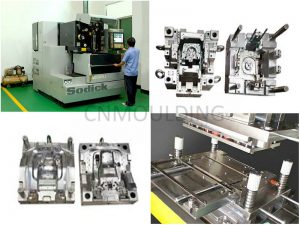
- Rough & Finish CNC Milling: High-speed CNC milling and deep-hole drilling shape the core and cavity blocks to tight tolerances.
- EDM & Wire EDM: Electrical Discharge Machining is required for sharp internal corners, deep ribs, and intricate micro-features that CNC cutters cannot reach.
- Master Hand Polishing & Texturing: Achieving optical mirror finishes, SPI grades, or specific VDI/MT mold textures relies heavily on veteran toolmakers. This manual labor directly dictates surface aesthetics and smooth part ejection.
- Engineering & CAD/CAM Programming: Front-end parting line design, 3D split-line creation, Moldflow analysis, and CNC programming. Experienced engineers eliminate sink marks, gas traps, and filling imbalances before steel cutting even begins.
3. Sampling & Validation (The Proof of Performance)
A finished mold is never shipped straight from the machine; it must undergo rigorous physical testing and fine-tuning.
- Sampling Press Time & Resin Consumption: Allocating the correct press tonnage and consuming virgin resin for initial trial shots.
- Trial Tuning & Iteration ($T_1$ to $T_f$): The first trial ($T_1$) almost always highlights minor thermal, venting, or geometric adjustments. Skilled toolmakers spend hours spot-checking, hand-fitting, and re-machining until First Article Inspection (FAI) parts meet absolute perfection. Inadequate upfront design leads to skyrocketing iteration costs here.
4. Packaging, Corrosion Prevention & Logistics (Cross-Border Delivery)
Delivering a heavy steel tool across oceans requires rigorous protection against environmental hazards.
- Vacuum Anti-Rust & Crating: Heavy-duty fumigated wooden crates, VCI (Volatile Corrosion Inhibitor) vacuum bags, desiccants, secure blockings, and spare parts kits.
- International Freight & Customs (DDP): Inland trucking, ocean or air freight, port handling fees, customs clearance, and marine insurance. Utilizing DDP (Delivered Duty Paid) terms locks in these final expenses, protecting you from unexpected port detention fees or customs delays.
5. Built-In Quality & Traceability (The TCO Buffer)
- After-Sales Support & Data Package: Reputable manufacturers provide full documentation, including steel mill certificates, hardness test reports, and fully updated “As-Built” STEP/IGES CAD files. Without these, future maintenance or secondary tooling modifications abroad become a logistical nightmare.
A Manufacturer’s Bottom Line:
In custom injection molding, you truly get what you pay for. Low-cost suppliers often cut corners on steel quality (using uncertified or scrap steel), standard hardware (using non-standard cheap parts), and trial rigor (shipping after a single rushed sample).
As a professional precision mold maker and injection molder based in Shanghai, we believe that transparent, rigorous upfront investment in tooling is the only way to guarantee zero downtime and maximum long-term ROI during mass production.