The advent of 3D printing technology (additive manufacturing) has undeniably revolutionized the manufacturing landscape. Its ability to produce complex designs and functional prototypes quickly without front-end tooling cost makes it an attractive option. However, a question often arises among product designers and engineers: Will 3D printing eventually replace traditional injection molding as the go-to method for mass production?
To answer this, we need to look beyond the hype and analyze the core strengths, limitations, and, most importantly, the synergy between these two technologies from a professional mold maker’s perspective.
Injection Molding: The Powerhouse of Mass Production
Injection molding remains the gold standard for producing large quantities of identical plastic parts.
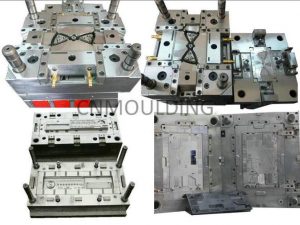
- The Advantages: It offers unmatched efficiency, exceptional surface finishes, and tight tolerances (down to the micron level). Once the injection mold is built, the cycle time per part is incredibly fast—often just seconds—making the cost per part extremely low. Furthermore, it supports an almost limitless range of commercial-grade plastics and engineering resins.
- The Limitations: The primary drawback is the high initial investment and lead time required for tooling (designing and machining the steel/aluminum mold). Therefore, it is financially unviable for low-volume production.
3D Printing: The King of Flexibility and Prototyping
3D printing excels where traditional manufacturing faces bottlenecks: during the prototyping and low-volume iteration phases.
- The Advantages: It eliminates the need for expensive upfront tooling, allowing engineers to test designs and make modifications on the fly. It also enables complex geometries—such as internal lattices—that are impossible to machine using traditional CNC or EDM methods.
- The Limitations: For mass production, 3D printing is still too slow and costly per unit. While material options are growing, they still cannot fully match the mechanical properties, durability, and consistency of injection-molded plastics for high-stress end-use applications.
The Real Trend: Coexistence and Integration
Rather than replacing injection molding, 3D printing is actually complementing it. In modern precision mold making, we see a powerful convergence of both technologies:
- 3D Printed Mold Inserts (Conformal Cooling): High-end mold makers now use metal 3D printing (such as DMLS/SLM) to create mold inserts with conformal cooling channels. These complex internal waterways follow the exact contour of the part cavity, which is impossible with traditional drilling. This reduces injection molding cycle times by up to 20-40% and drastically minimizes part warping.
- Bridge Tooling: 3D printed molds can be used for ultra-low-volume injection molding runs (bridge tooling) to test market reactions before investing in production-grade steel molds.
Conclusion: Which One Do You Need?
In conclusion, 3D printing will not replace injection molding entirely. Instead, they serve different stages of the product lifecycle:
- Choose 3D Printing if you need rapid prototyping, highly customized parts (e.g., medical implants), or production volumes under a few hundred units where tooling cost is prohibitive.
- Choose Injection Molding if your project requires high-volume production (thousands to millions of parts), consistent mechanical properties, flawless surface aesthetics, and the lowest possible cost per part.
As technology advances, the boundary between prototyping and production will continue to blur, but injection molding remains irreplaceable for scaling up manufacturing efficiently.
Looking for a reliable partner to bring your design from prototype to high-volume production? At CNMOULDING we specialize in precision injection mold making and custom molding solutions to help you optimize both quality and cost. [Contact our engineering team today] for a free DFM analysis.