
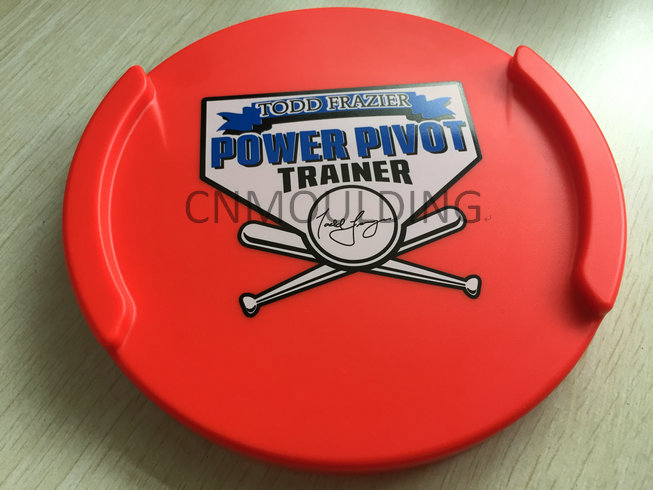
Secondary Processing Excellence: Injection Molding & Plastic Screen Printing Integration
For high-precision plastic components, injection molding is only the first step. To meet the demanding aesthetic and functional requirements of modern industries, Screen Printing serves as a vital secondary processing service. As an established injection molding manufacturer, we integrate tooling, molding, and surface decoration into a seamless workflow, ensuring micron-level alignment and superior ink adhesion.
1. Why Integrate Screen Printing with Injection Molding?
Raw injection-molded parts often face material limitations, such as monochrome color options and vulnerable UV resistance. Screen printing solves these challenges by adding selective graphics, functional text, and protective coatings directly onto the molded surface.
Key Advantages for Your Projects:
- High Opacity & Vibrant Graphics: Unlike digital printing, screen printing deposits a thicker layer of ink, providing excellent color density and wear resistance on industrial components.
- Cost-Effective for Mass Production: Once the screen stencils are engineered, the per-unit decoration cost drops significantly, matching the economic scale of high-volume injection molding runs.
- Material Versatility: It achieves exceptional chemical bonding across a wide range of engineering plastics, including ABS, Polycarbonate (PC), PMMA (Acrylic), PVC, and modified Polystyrene (PS).
2. Industrial Applications
Our integrated molding and printing services support critical components across high-specification sectors:
- Electronic & Electrical Appliances: Control panels, housing, and bezels for smart homes, televisions, radios, and recorders that demand flawless cosmetics.
- Automotive & Industrial Components: High-contrast instrument dials, backlit dashboards, and durable technical signs/labels.
- Medical & Cosmetic Packaging: Labeled medical device housings (complying with ISO 13485 hygiene protocols) and high-aesthetic cosmetic containers.
3. Engineering Guide: Processing Categorization & Technical Control
Different resin characteristics and part geometries dictate specific screen printing and curing mechanics:
A. Flat & Molded Rigid Plastics (Hard Plastics)
- Application: Sheet components, instrument faces, and enclosures.
- Process Control: Molded parts must undergo strict surface tension checks (Dyne testing). Residual mold release agents from the injection phase must be entirely eliminated via specialized cleaning to prevent ink rejection.
B. Flexible & Elastomeric Plastics (Soft Plastics)
- Application: Inflatable components, soft-touch handles, and toys (thickness ranging from 0.8mm to 3.0mm).
- Technical Challenge (Thermal Expansion & Shrinkage): Soft resins often undergo linear thermal contraction during multi-color printing cycles, causing registration (chromatic) errors.
- Our Solution: We utilize fixed long-bed printing matrixes with specialized vacuum or adhesive positioning to lock the substrate down. For multi-color graphics, we implement precise nesting designs during the injection mold design stage to ensure perfect mechanical registration.
- Compliance Note: For toy and consumer products, we strictly deploy certified non-toxic, heavy-metal-free inks.
C. Cylindrical & Contoured Profiles (Plastic Hoses/Tubes)
- Application: Extruded or blow-molded hoses and cylindrical containers.
- Process Control: For complex or flexible contours, we frequently leverage Thermal Transfer Printing alongside direct screening. By using heated plates to sublimate dye inks from a carrier film directly into the treated plastic substrate, we achieve crisp 360° graphics. Post-transfer curing is tightly regulated at 65°C to prevent any thermal deformation of the molded part.
4. DFM & Troubleshooting: Resolving Common Printing Defects
Defects in screen printing are often rooted in the injection molding process itself. True optimization requires an understanding of how mold design and molding parameters affect surface energy.
| Defect Type | Root Cause in Injection/Processing | Engineering Solution |
|---|---|---|
| Poor Ink Adhesion (Peeling) | Low surface energy of raw resins (e.g., PP/PE); residual silicone mold release agents. | Implement flame, corona, or plasma surface pre-treatments; mandate release-agent-free molding cycles. |
| Registration / Alignment Errors | Post-molding warpage; inconsistent part shrinkage; material stretching during multi-color passes. | Optimize holding pressure and cooling time during injection to minimize internal stress; utilize rigid fixtures. |
| Ink Cracking or Crazing | High internal stress in molded parts (especially PC/ABS); aggressive ink solvents attacking the resin. | Adjust injection speed and melt temperatures to reduce molded-in stress; perform stress-relief annealing if necessary. |
| Pinholes / Fish-eyes | Surface contamination from airborne dust or oils in the post-molding environment. | Execute printing operations within a controlled, dust-free environment with automated part cleaning. |
5. How to Select the Right Decoration Process
When consulting on your next project, our engineering team evaluates three primary vectors to determine if screen printing is your optimal choice:
- Part Geometry: Flat or regularly curved (cylindrical) surfaces are ideal for screen printing. For highly complex 3D organic shapes, we may recommend exploring pad printing (tampon printing) or in-mold labeling (IML).
- Resin Selection: Amorphous plastics (ABS, PC, PS) inherently offer excellent ink affinity. Semi-crystalline plastics (PP, PE, POM) require mandatory surface activation pre-treatments.
- End-Use Environment: For parts exposed to harsh chemicals, friction, or outdoor UV rays, we formulate specialized multi-component epoxy or UV-curable inks to guarantee a robust life cycle.
By handling both injection mold design and secondary surface processing under one roof, we eliminate the risks of multi-vendor coordination, delivering fully finished, assembly-ready components directly to your production line.