
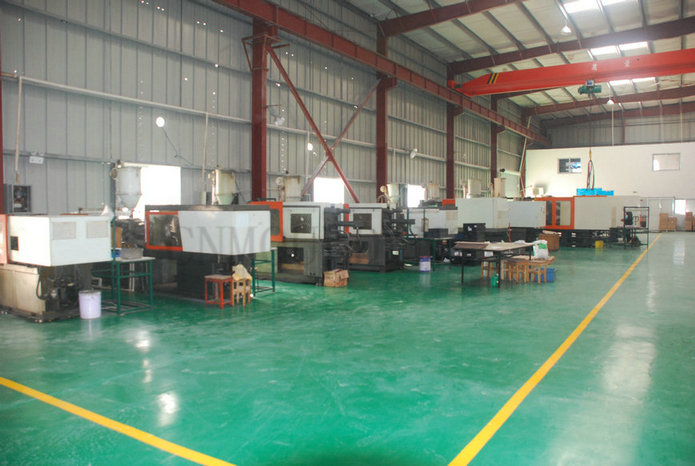
Servo Motor China Injection Molding Machine: High-Precision & Energy-Saving Solutions
At CNMOULDING, delivering flawless plastic components requires not only top-tier injection mold design but also advanced, highly efficient production machinery. Our fleet of high-specification China injection molding machines with servo motors (such as the JD410T) bridges the gap between ultra-precise manufacturing and exceptional energy efficiency.
By utilizing closed-loop servo control systems, our machinery minimizes production costs while maximizing structural accuracy for clamping forces ranging from 70 Ton to 850 Ton.
Technical Specifications & High-Standard Configuration
Our servo-driven plastic injection molding machines are engineered with advanced features to handle high-precision industrial and medical applications:
- Double-Cylinder Balanced Injection Structure: Ensures uniform pressure distribution during the melt injection phase, preventing screw misalignment and guaranteeing high shot-repeatability.
- Multi-Stage Process Setting:
- Injection Phase: 4-stage adjustable settings for velocity, pressure, and position control.
- Holding & Charging Phase: 3-stage precise control over holding pressure, charging speed, and positioning.
- Intelligent Monitoring & Protection:
- Real-time injection position monitoring via high-precision linear scales.
- Screw Cold-Start Prevention: Automatically locks the screw rotation if the heating barrel has not reached the preset temperature, preventing mechanical fatigue and screw breakage.
- Versatile Carriage Modes: Three selectable nozzle seat options to accommodate varying mold feeding structures.
How Servo Motors Drastically Reduce Energy Consumption in Injection Molding
Electricity is historically the largest operational cost driver in the Chinese plastic injection molding industry. To maximize profitability, optimizing kinetic and thermal efficiency is mandatory.
Understanding the mechanical superiority of Servo Motors over traditional Induction (Squirrel-Cage) Motors explains why our machinery achieves up to 50%–70% energy savings.
1. The Energy Waste in Traditional Induction Motors
Traditional injection molding machines utilize fixed-speed asynchronous induction motors to drive hydraulic pumps. These motors rotate constantly at a fixed speed (typically 1500 RPM for a 4-pole motor at 50Hz), regardless of whether the machine is actively injecting or idling.
- The Standby Drain: During periods of the molding cycle such as extended cooling times (critical for thick-walled parts), part ejection by robots, or manual part removal by an operator, the machine enters a standby state.
- The Data: For a traditional 11kW induction motor driving a variable displacement pump during standby, the motor continues to spin at full speed. It draws a measured current of approximately 7A (roughly 29% of its full load rated current of 24A), converting unused kinetic energy entirely into wasted heat. This excess heat shifts directly into the hydraulic oil, requiring massive water cooling systems to prevent oil degradation.
2. The Servo Motor Advantage: Zero-Speed Standby
In contrast, a servo motor-driven system operates on a highly responsive closed-loop feedback mechanism that modulates both pressure and flow dynamically.
- Dynamic Adaptation: When the system requires no flow or pressure (such as during cooling or part removal), the servo motor slows down to a complete stop (0 RPM).
- The Data: For an equivalent 11kW servo motor system in a standby state, the power draw drops drastically, pulling a current of less than 1A.
Advanced Hydraulic Optimization: Eliminating Thermal Loss
Energy efficiency in our injection molding setup is not limited to the motor. We actively optimize the entire hydraulic kinetic chain to prevent friction-induced energy losses:
- Friction & Internal Leakage Reduction: Traditional low-cost molding machines often use undersized, small-diameter hydraulic tubing to cut initial manufacturing costs. This restricts oil flow, increases fluid friction against the tube walls, and rapidly raises oil temperature—wasting energy.
- Premium Hydraulic Circuits: Our machinery features optimized, wide-diameter hydraulic piping layouts with minimized sharp bends. This reduces internal pressure drops, keeps hydraulic oil running cooler, drastically reduces the workload on the oil coolers, and ensures stable, long-term precision molding performance.
Partner with CNMOULDING for Efficient Production
Whether your project demands a compact 70-ton press for tight-tolerance internal gears or a robust 850-ton setup for structural housings, CNMOULDING optimizes the balance between tooling design and machinery performance. Our investment in energy-saving servo-driven technology directly translates to competitive part pricing, faster cycle times, and reduced environmental impact for your global supply chain.