Skip to content
FacebookTwitterYouTubeLinkedin
0086-18964821913webmaster@cnmoulding.comwhatsapp:+8613061707408wechat:+8613061707408Skype:cnmoulding88
Wordpress
chinamoldmaker
Wordpress
  • Services
    • Plastic injection molding
    • Injection Mold
    • Rapid prototype
    • Thermoforming
    • Die Casting
  • Industries
    • Medical
    • Automotive
    • Prototype
    • Industrial
  • Why CNMOULDING
    • company
    • Manufacturer
    • Blog
      • Mold
      • News
      • injection molding material
      • Plastic injection molding
  • Designer Hub
    • mold design
    • Industrial design
    • Cpk Quality Control
    • Process Control
  • Part gallery
    • Injection Equipment
    • Mold Equipment
    • Inspection Equipment
  • Contact
  • Services
    • Plastic injection molding
    • Injection Mold
    • Rapid prototype
    • Thermoforming
    • Die Casting
  • Industries
    • Medical
    • Automotive
    • Prototype
    • Industrial
  • Why CNMOULDING
    • company
    • Manufacturer
    • Blog
      • Mold
      • News
      • injection molding material
      • Plastic injection molding
  • Designer Hub
    • mold design
    • Industrial design
    • Cpk Quality Control
    • Process Control
  • Part gallery
    • Injection Equipment
    • Mold Equipment
    • Inspection Equipment
  • Contact

plastic injection molding sink mark

You are here:
  1. Home
  2. Page
  3. plastic injection molding sink mark

Troubleshooting and Preventing Sink Marks in Injection Molding:

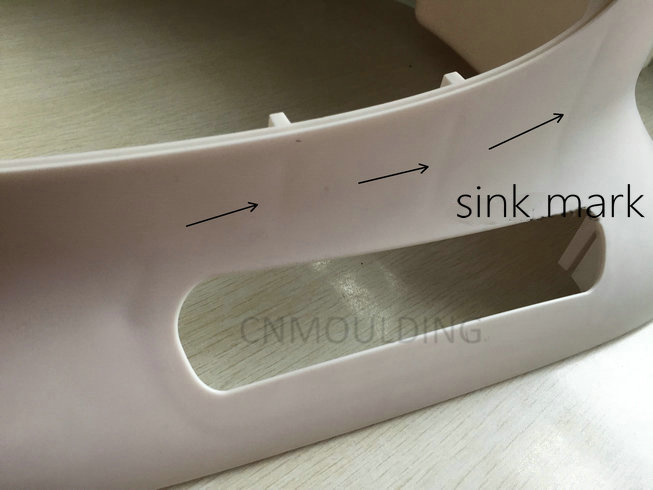
In plastic injection molding, sink marks are among the most common visual and structural defects. They appear as shallow depressions, dimples, or hollows on the surface of a molded part.

Understanding the root causes of sink marks—and knowing how to prevent them through proper part design and processing parameters—is critical to achieving high-quality production results.

What Causes Sink Marks?

A sink mark occurs during the cooling phase. When a plastic part is injected, the outer layer touching the cold mold steel solidifies first. However, the thicker core or inner material remains molten and cools much more slowly. As this inner core eventually solidifies and shrinks, it exerts a thermal contraction force, pulling the already-solidified outer skin inward and creating a depression.

Sink marks are most prevalent in thick sections, or directly behind structural features like ribs, bosses, and internal walls where material mass is concentrated.

Major Causes of Sink Marks

The formation of sink marks usually stems from three main categories: Part Design, Material Selection, and Processing Parameters.

1. Processing Parameters (Molding Conditions)

  • Inadequate Holding Pressure or Time: Holding pressure packs extra material into the mold cavity to compensate for natural volumetric shrinkage. If the holding pressure is too low, or the holding time is too short (gate freezes off too early), the cavity will under-pack, causing the material to shrink excessively.
  • Insufficient Cooling Time: If the cooling cycle is cut short, the part is ejected while its core is still soft and unstable, leading to post-ejection shrinkage.
  • Excessive Melt Temperature: High melt temperatures increase the overall thermal expansion of the plastic, requiring more cooling time and leading to greater total shrinkage.

2. Part & Mold Design

  • Excessive or Non-Uniform Wall Thickness: Thicker sections retain heat longer. If a part has sudden transitions from thin to thick walls, the thick areas will cool slower, making them prime targets for sink marks.
  • Improper Gate Size or Location: If the gate is too small, it freezes before the part cavity can be fully packed. If the gate is located too far from the thickest section, pressure drops before it can adequately pack that dense area.

3. Material Properties

  • High Material Shrinkage Rate: Semi-crystalline plastics (such as PP, PE, or Nylon/PA) exhibit much higher volumetric shrinkage rates during crystallization than amorphous plastics, making them inherently more prone to sinking.

Comprehensive Solutions to Prevent and Fix Sink Marks

To eliminate sink marks, engineers must optimize both the molding process and the physical layout of the part and mold.

1. Injection Molding Process Adjustments (Quick Fixes on the Shop Floor)

  • Increase Packing/Holding Pressure and Time: Force more molten plastic into the cavity during the holding phase to make up for the volume lost during cooling.
  • Lower Melt and Mold Temperatures: Reducing temperatures minimizes the total thermal contraction of the resin.
  • Extend the Cooling Cycle: Ensure the core of the part is sufficiently solidified before the mold opens.

2. Tooling & Mold Design Optimization

  • Optimize Gate Placement: Position the gate directly at or near the thickest section of the part. This ensures maximum packing pressure reaches the areas most vulnerable to sinking.
  • Enlarge Gate and Runner Cross-Sections: Prevent premature gate freeze-off so that holding pressure remains effective throughout the cooling transition.
  • Upgrade Mold Cooling Channels: Design conformal or highly efficient cooling circuits near thick zones to achieve uniform cooling rates across the entire mold insert.

3. Smart Part Design (The Ultimate Prevention)

  • Maintain Uniform Wall Thickness: Always design parts with consistent wall structures.
  • Follow the “Rib-to-Wall” Ratio: To avoid sink marks on the cosmetic surface opposite a rib, keep the rib thickness between 40% to 60% of the main nominal wall thickness.
  • Utilize Coring and Ribbing: Instead of designing solid thick blocks, core out the excess material to create a hollowed section supported by thin reinforcing ribs.

Summary of Corrective Actions

Action TypeSolution Strategy
On-Site ProcessingIncrease holding pressure • Extend holding time • Lower melt temperature • Extend cooling time
Mold ModificationRelocate gate to thick areas • Increase gate/runner size • Optimize cooling channel layout
Product RedesignImplement uniform wall thickness • Reduce rib/boss thickness • Use coring to eliminate heavy mass

By pairing robust Design for Manufacturing (DFM) practices with precise injection molding control, you can consistently eliminate sink marks and deliver pristine, high-tolerance plastic components.

Share this post
TweetShare on Twitter Pin itShare on Pinterest Share on FacebookShare on Facebook Share on LinkedInShare on LinkedIn
Recent Articles
  • injection mold cost
    China Injection Mold Cost
    15/06/2026
  • mold making company
    Custom Plastic mold & Injection Molding: Turnkey Contract Manufacturing Solutions
    09/06/2026
  • plastic products Manufacturing
    Plastic Injection Molding in China: Sourcing Guide
    07/06/2026
  • Automotive plastics material
    Electric Vehicle Plastics Engineering Injection Molding Solutions
    06/06/2026
Tags
Automotive plastic parts Blog injection molding material Mold News Plastic injection molding

Injection molding sink mark

You are here:
  1. Home
  2. Mold
  3. Injection molding sink mark

Injection molding sink Mark– its causes and solutions

Injection Molding Sink Marks: Causes, Prevention, and Remedies

Injection molding is an incredibly versatile manufacturing process that can produce a wide range of plastic components. However, one common issue that can arise during the injection molding process is the appearance of sink marks on the surface of the molded parts. Sink marks can detract from the aesthetic quality of the finished product and may even compromise its structural integrity. In this post, we’ll explore the causes of injection molding sink marks and discuss some prevention and remediation strategies.

What are Injection Molding Sink Marks?

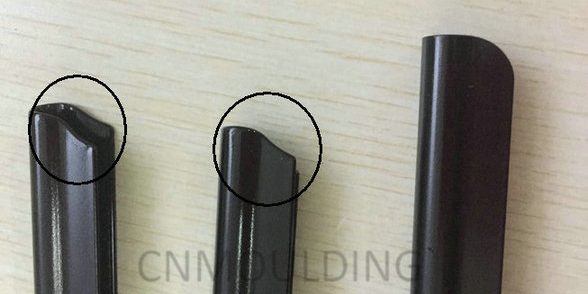
Injection molding sink marks are depressions or indentations that appear on the surface of a molded part. These marks can occur when the surface of a part cools and solidifies before the underlying material has completely filled out. This can result in a depression or indentation on the surface of the part, which is known as a sink mark.

Causes of Injection Molding Sink Marks

There are several factors that can contribute to the formation of sink marks during the injection molding process. One common cause is inadequate packing pressure, which can result in incomplete filling of the mold cavity. This can create voids or air pockets in the material, which can cause sink marks to form as the material cools.

Another factor that can contribute to sink mark formation is insufficient cooling time. If a part is ejected from the mold too soon, it may not have had sufficient time to cool and solidify, which can cause sink marks to form as the material continues to shrink.

Prevention Strategies

One of the most effective ways to prevent injection molding sink marks is to optimize the injection molding process itself. This may involve adjusting the packing pressure, cooling time, or other process parameters to ensure that the material fills out the mold cavity completely and cools evenly.

Another effective prevention strategy is to modify the design of the part itself. By adding ribs or other structural features to the part, it may be possible to reduce the amount of material required to fill out the mold cavity, which can help to prevent sink marks from forming.

Remediation Strategies

If sink marks do appear on a molded part, there are several remediation strategies that can be employed. One common approach is to use a filler material to fill in the depression or indentation. This can help to restore the surface of the part to its original shape and smoothness.

Another remediation strategy is to use heat or pressure to “heal” the sink mark. By applying heat or pressure to the affected area, it may be possible to cause the material to flow back into the depression or indentation, effectively eliminating the sink mark.

Conclusion

Injection molding sink marks can be a frustrating and costly problem for manufacturers. However, by understanding the causes of sink marks and implementing effective prevention and remediation strategies, it is possible to minimize their impact and produce high-quality molded parts. By optimizing the injection molding process, modifying part designs, and employing remediation techniques when necessary, manufacturers can ensure that their products meet the highest standards of quality and performance.

In addition, to the sink mark, the production process will encounter shrinkage, then you need a different solution
Related posts:

  1. Medical supplies
  2. How do install a plastic mold to an injection machine?
  3. China Injection Mold Cost
  4. 6 Tips to install Injection Mould on Molding Machine
Share this post
TweetShare on Twitter Pin itShare on Pinterest Share on FacebookShare on Facebook Share on LinkedInShare on LinkedIn

From the Same Category

injection mold cost
China Injection Mold Cost
15/06/2026
mold making company
Custom Plastic mold & Injection Molding: Turnkey Contract Manufacturing Solutions
09/06/2026
hot runner
Advanced Hot Runner Mold Manufacturing: Overcoming Technical Challenges for Global OEM
25/05/2026
Sourcing Automotive Injection Molds in China
22/05/2026
injection mold slider design
27/03/2025
Recommended top 5 injection mould companies in china
08/12/2023
CONTACT US
  • Address:
    No,1062, Jiaxing Road, Malu Town, Shanghai China,
  • Business hours:
    24 HOURS ONLINE
  • Phone number:
    86-021-52913487

Find us on:

FacebookTwitterYouTubeLinkedinSkypeMailWhatsapp
News
  • China Injection Mold Cost
    15/06/2026
  • Custom Plastic mold & Injection Molding: Turnkey Contract Manufacturing Solutions
    09/06/2026
  • Plastic Injection Molding in China: Sourcing Guide
    07/06/2026
  • Services
    • Plastic injection molding
    • Injection Mold
    • Rapid prototype
    • Thermoforming
    • Die Casting
  • Industries
    • Medical
    • Automotive
    • Prototype
    • Industrial
  • Why CNMOULDING
    • company
    • Manufacturer
    • Blog
      • Mold
      • News
      • injection molding material
      • Plastic injection molding
  • Designer Hub
    • mold design
    • Industrial design
    • Cpk Quality Control
    • Process Control
  • Part gallery
    • Injection Equipment
    • Mold Equipment
    • Inspection Equipment
  • Contact
Services

© Seven Construction 2016. All rights reserved.

Go to Top