
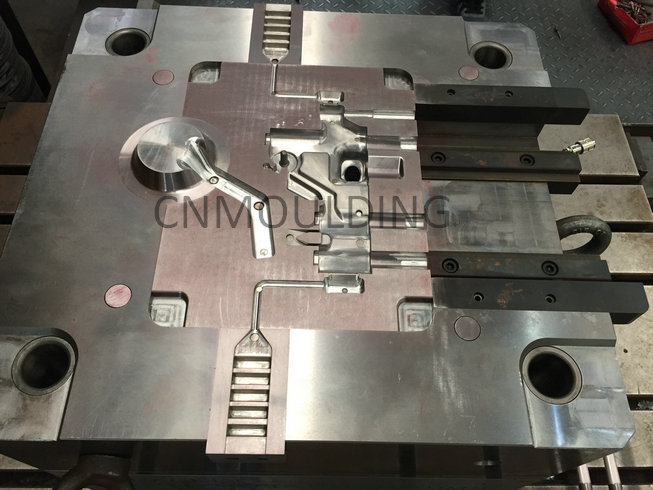
Die casting is a metal casting process that involves forcing molten metal under high pressure into a mold cavity, called a die. The die is typically made of hardened tool steel and is reusable. Die casting is widely used in manufacturing for producing high-volume, precision metal parts with excellent surface finish and dimensional consistency.
Key Features of Die Casting:
- High Pressure Injection – Molten metal is injected at high speed (up to 100 m/s) and pressure (up to 1,000+ bar).
- Reusable Molds (Dies) – The dies can be used thousands of times before needing replacement.
- High Production Rate – Ideal for mass production due to fast cycle times.
- Excellent Precision & Surface Finish – Parts often require little to no machining after casting.
- Thin-Walled Components – Capable of producing complex shapes with thin walls.
Common Metals Used:
- Aluminum (lightweight, corrosion-resistant)
- Zinc (high strength, good for small parts)
- Magnesium (ultra-lightweight)
- Copper & Brass (high conductivity)
- Lead & Tin (low melting point applications)
Types of Die Casting:
- Hot-Chamber Die Casting
- Used for low-melting-point metals (zinc, lead, tin).
- The injection system is submerged in molten metal.
- Faster cycle times.
- Cold-Chamber Die Casting
- Used for high-melting-point metals (aluminum, copper).
- Molten metal is ladled into the injection chamber.
- Higher pressure required.
Advantages:
High production efficiency
Tight tolerances (±0.1 mm or better)
Smooth surface finish (can eliminate machining)
Complex shapes achievable
Good mechanical properties
Disadvantages:
High initial die cost (not economical for small batches)
Limited to non-ferrous metals (typically)
Porosity can occur in thick sections
Applications:
- Automotive (engine parts, transmission housings)
- Aerospace (lightweight components)
- Electronics (heat sinks, connectors)
- Consumer Goods (appliance parts, power tools)
- Medical Devices (surgical instruments)
Die Casting vs. Other Casting Methods:
| Feature | Die Casting | Sand Casting | Investment Casting |
|---|---|---|---|
| Surface Finish | Excellent | Rough | Very Good |
| Tolerance | Very High | Low | High |
| Production Rate | Very Fast | Slow | Moderate |
| Cost (High Volume) | Low | Low | High |
| Material Flexibility | Non-ferrous | All metals | All metals |
Die casting is ideal for industries requiring high precision, repeatability, and fast production of metal parts. Would you like details on a specific aspect, such as die design or defect prevention?